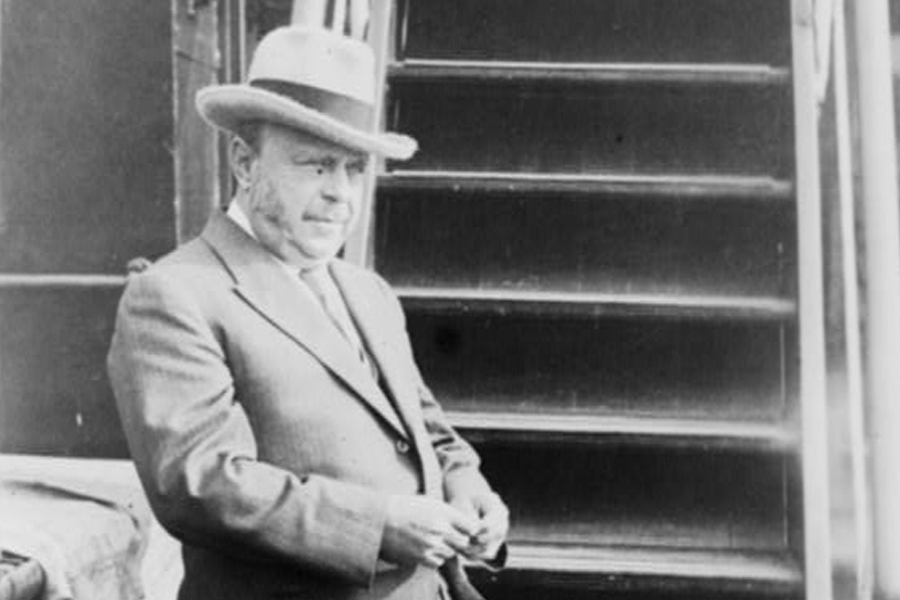
A St. Louis beginning
I think August Anheuser Busch Sr. was one of those rare family characters who bridged generations. He was born in St. Louis on December 29, 1865, when it was still becoming a commercial hub. After leading one of America’s most famous business families, he died there on February 10, 1934. He inherited more than a name. He inherited ambition, pressure, and public expectation and had to maintain it during some of the worst years in American history.
The fact that he was the eldest son of Adolphus Busch and Lilly Eberhard Anheuser Busch, two major brewing lines, mattered. The margins did not define his existence. Built in a hub of industry, wealth, and prestige. His family understood size. That world saw beer as more than a product. Civic force, identity, and status language.
The family circle around him
The Busch family tree around August Sr. was large, layered, and socially influential. I think of it as a wide oak with many strong branches, each one carrying its own name, marriage, and story.
| Relation | Name | Notes |
|---|---|---|
| Father | Adolphus Busch | Brewer, family patriarch, and the man who helped build the Anheuser-Busch empire |
| Mother | Lilly Eberhard Anheuser Busch | Daughter of Eberhard Anheuser, linking the Busch and Anheuser lines |
| Spouse | Alice Edna Zisemann | Married August Sr. on May 8, 1890 |
| Son | Adolphus Busch III | Later connected to brewery leadership |
| Daughter | Marie Busch Jones | One of the family’s next generation figures |
| Daughter | Clara Hazel Busch | A daughter whose life remained tied to the Busch family line |
| Son | August Busch Jr. | Better known as Gussie, the most famous of August Sr.’s children |
| Daughter | Alice Busch | Also recorded in later family records under married names |
His father, Adolphus Busch, stands as the towering origin point. He was the builder type, the man with a strong sense of scale and permanence. August Sr. inherited that shadow and that structure. His mother, Lilly Eberhard Anheuser Busch, connected him directly to the Anheuser side of the brewing story, giving the family name even greater historical weight.
His wife, Alice Edna Zisemann, helped carry the family through the social world of St. Louis. Their marriage on May 8, 1890, tied the Busch household to another branch of local prominence. She was not just a companion in the private sense. She was part of the family’s public life, the kind that moved through estates, formal events, and the ceremonial theater of elite St. Louis society.
Among their children, August Busch Jr., later known as Gussie, became the most famous. He went on to shape the next chapter of the family’s public identity, especially through the brewery and the Cardinals. Adolphus Busch III also carried the family name into the business world. Marie Busch Jones, Clara Hazel Busch, and Alice Busch complete the immediate children who kept the Busch line moving forward through marriage, descendants, and social continuity.
From Gussie came another generation that kept the family visible for decades. His children included Adolphus Busch IV, Beatrice Busch von Gontard, Peter Busch, Trudy Busch Valentine, William Busch, Andrew Busch, and Christina Martina Busch. That means the family did not fade after August Sr. It multiplied, adapted, and remained part of the public conversation long after his death.
A career built on pressure and survival
August Sr. became president of Anheuser-Busch in 1913 after the death of his father. That moment mattered more than a routine leadership change. He stepped into the top seat just as the world was entering years of instability that would test almost any industrial family. World War I, Prohibition, and the Great Depression were not abstract events to him. They were headwinds pressing hard against the brewery’s hull.
What impresses me most is that he did not preside over a static inheritance. He had to improvise. During Prohibition, the company could not simply rely on beer, so it diversified into soft drinks, ice cream, yeast, refrigeration equipment, and other products. That kind of pivot is not glamorous. It is survival with its sleeves rolled up. A business can look like a marble palace from the outside, but inside it often survives by learning how to change shape.
Bevo, the company’s malt beverage, became one of the period’s most important products. It gave the business a way to stay visible and profitable when alcohol sales were under siege. I read his career as proof that leadership is not always about invention. Sometimes it is about endurance, discipline, and refusing to let a famous name become an empty one.
Estate, image, and the family mythos
August Sr. also shaped the family’s physical heritage. St. Louis’ Busch estate culture was home, symbol, and success theater. In land, animals, architecture, and ritual, Grant’s Farm and adjacent sites anchored the family tale. These destinations were more than scenery. They commemorated continuity.
The legendary Clydesdales boosted the family image. The post-Prohibition delivery that linked the horses to the family was one of the great American brand scenes and helped establish the Busch name. August Sr.’s minor accomplishments include that. He did more than sustain a corporation. He preserved its aura. He knew that well-maintained reputation can last as long as brick.
The weight of legacy
August Sr.’s story is not just a business story. It is a family story shaped by inheritance, marriage, children, public image, and the pressure of expectation. He stands in the middle of a line that stretches backward to the Anheuser brewing roots and forward to descendants who continued to shape American business and culture.
His children and grandchildren carried the family name into new eras, but the defining tone of his own life was steadiness under strain. He was the kind of figure who kept the structure upright when the weather turned. In a family famous for scale, he was one of the people who made scale possible.
FAQ
Who was August Anheuser Busch Sr.?
He was a St. Louis brewing executive, born in 1865 and died in 1934, who became president of Anheuser-Busch in 1913 and guided the company through war, Prohibition, and economic hardship.
Who were his parents?
His parents were Adolphus Busch and Lilly Eberhard Anheuser Busch. That placed him directly inside the founding brewing bloodline that shaped the company.
Who was his spouse?
He married Alice Edna Zisemann on May 8, 1890. She belonged to the social world that surrounded the Busch family’s public life.
How many children did he have?
He had five well-documented children: Adolphus Busch III, Marie Busch Jones, Clara Hazel Busch, August Busch Jr., and Alice Busch.
Why is August Busch Jr. important?
August Busch Jr., also known as Gussie, became the most famous of August Sr.’s children. He later became a major figure in the family’s brewery and sports legacy.
What was August Sr.’s biggest business achievement?
His most important achievement was keeping Anheuser-Busch strong during Prohibition by diversifying into nonbeer products and preserving the company’s brand power.
What role did family properties play in his legacy?
Properties such as Grant’s Farm helped turn the Busch family into more than a business name. They became part of a living legacy of land, ceremony, and public memory.
How did his descendants continue the family line?
His descendants spread across business, philanthropy, and public life. Through August Busch Jr., the family line included figures such as Adolphus Busch IV, Peter Busch, Trudy Busch Valentine, and others who kept the Busch name active across generations.