The woman behind the dynasty
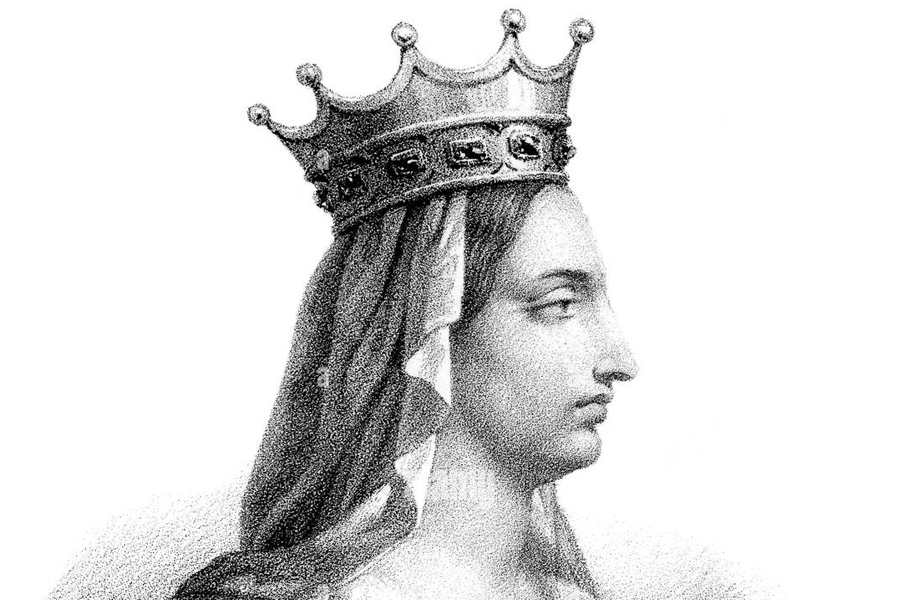
No footnotes appear in Bertrada Of Laon. A historical hinge. The weight of kingdoms weighed on her as the heart of a Carolingian household. She married a man who would change Europe after being born in Laon in the early 8th century. She became Frankish queen consort after marrying Pepin the Short. As the mother of Charlemagne and Carloman I, she started one of the most famous medieval royal lines.
Her narrative goes beyond sparkle. It relies on legitimacy, strategy, diplomacy, and family pressure. In her society, lineage was like iron, and hers was important. The Carolingian dynasty obtained a noble local base and a symbol of continuity via her. Bertrada was more than present. She was in the future-making room.
Her early life and origins
I begin with what can be said with the most confidence. Bertrada Of Laon was born in Laon, likely around 710 to 727, though the exact date remains uncertain. She belonged to an aristocratic Frankish family and was the daughter of Charibert of Laon. That connection matters because Charibert placed her inside a strong regional network of land, loyalty, and influence. Her mother is less certain in the historical record, which is often the case with women of her era. Their lives were recorded unevenly, as if history itself had only half-opened the door.
Her surname points to place rather than household in the modern sense. Laon was not just a birthplace. It was a marker of identity. In medieval politics, a place could be a banner. Bertrada carried that banner into the royal sphere.
Marriage to Pepin the Short
Her marriage to Pepin the Short turned her from a noble daughter into a royal partner. Pepin was first the mayor of the palace, then king of the Franks. Their union was not only personal. It was political architecture. If I picture the Frankish kingdom as a great house, then their marriage was one of the load-bearing beams.
They married around 740 or 741, though traditions sometimes suggest that the marriage was regularized later because of close kinship. That detail matters because it shows how dynastic politics and church approval could overlap, sometimes uneasily. Bertrada was not merely Pepin’s wife. She was part of the story by which his rule gained legitimacy.
Together they formed the heart of the early Carolingian dynasty. Their household was a royal engine. Children, alliances, campaigns, church ties, and succession all passed through it. That is why Bertrada’s name survives with such force. She helped turn family into statecraft.
Children and descendants
Bertrada’s children are among the most important royal children in European history. The most famous were Charlemagne and Carloman I. Their names alone can fill a chronicle, but they were only part of the family circle. She also had daughters and other children who helped extend the family’s reach through religion and dynastic linkage.
Charlemagne became the towering Carolingian ruler, a king whose influence spread far beyond the Frankish world. Carloman I ruled alongside him for a short time before his death reshaped the balance of power. Gisela entered religious life and is often remembered as abbess of Chelles. Other children remembered in later traditions include Pepin, Bertha, Adelaide, and Rothaide, though the exact list varies across records. In family history like this, certainty and tradition sometimes walk side by side, but never perfectly in step.
Her grandchildren continued the line’s reach. Louis the Pious, son of Charlemagne, carried the royal legacy into the next generation. Pepin of Italy extended the family’s rule into another branch of the Carolingian tree. Through them, Bertrada’s influence outlived her body and hardened into dynasty.
I think of her family as a river system. One stream became Charlemagne. Another became Carloman. Smaller channels fed monasteries, marriages, and regional power. Together they carried the force of a royal age.
Political and social influence
Queen Bertrada of Laon was active. Her role was practical, political, and energetic. She accompanied Pepin on campaigns and may have contributed to court operations. Some tales indicate she oversaw army distributions, indicating administrative power. She practiced high-level dynasty diplomacy.
She became an even greater family stabilizer after Pepin’s death in 768. Bertrada worked between Charlemagne and Carloman I in the kingdom. That position is delicate. Mothers in divided royal houses can be bridges or fault lines. Bertrada attempted bridgehood.
She reached Italy via Bavaria in 770 to negotiate Charlemagne’s marriage with King Desiderius. That was no small task. Royal diplomacy on horseback across boundaries in a world without fast communication. Reading that, I envision a woman maneuvering through politics like a chess player.
Her last years and death
After Carloman’s death in 771, Bertrada retired to Choisy-au-Bac, a residence associated with Charlemagne. She died there on 12 July 783. Charlemagne buried her at Saint-Denis beside Pepin. That burial says a great deal. She was not forgotten, not sidelined, not reduced. She was placed among the central dead of the dynasty, where memory and legitimacy were preserved together.
The tomb itself becomes a final statement. She belonged to the foundation story of the Carolingians, and the dynasty knew it.
Family members at a glance
| Family Member | Relationship to Bertrada Of Laon | What makes this person important |
|---|---|---|
| Charibert of Laon | Father | Noble base of Bertrada’s lineage |
| Unknown mother | Mother | Historical gap, often debated |
| Pepin the Short | Spouse | King of the Franks, political partner |
| Charlemagne | Son | Greatest Carolingian ruler |
| Carloman I | Son | Co-ruler, key dynastic figure |
| Gisela | Daughter | Associated with Chelles and religious life |
| Pepin of Italy | Grandson | Extended the Carolingian line |
| Louis the Pious | Grandson | Successor generation through Charlemagne |
FAQ
Who was Bertrada Of Laon?
Bertrada Of Laon was a Frankish queen consort, the wife of Pepin the Short, and the mother of Charlemagne and Carloman I. She was a political and dynastic figure whose life was tied to the rise of the Carolingian dynasty.
Why is Bertrada Of Laon important?
I would say she matters because she stood at the root of a royal line that changed medieval Europe. Her marriage helped legitimize Pepin’s kingship, and her children carried the dynasty into its most famous era.
Was Bertrada Of Laon only a mother and wife?
No. She was also a political actor. She appears in courtly and diplomatic contexts, traveled for dynastic negotiation, and helped manage family and royal tensions after Pepin’s death.
What is known about her parents?
Her father is generally identified as Charibert of Laon. Her mother is not securely known, and later traditions disagree about her identity.
How many children did she have?
The exact count varies in the traditions, but the most important named children are Charlemagne, Carloman I, and Gisela, along with several other children preserved in later family accounts.
Where did Bertrada Of Laon die?
She died at Choisy-au-Bac on 12 July 783.
Why do historians still discuss her?
Because she sits at the crossroads of family, kingship, and legitimacy. Her life helps explain how the Carolingian dynasty took shape, and why that dynasty endured.