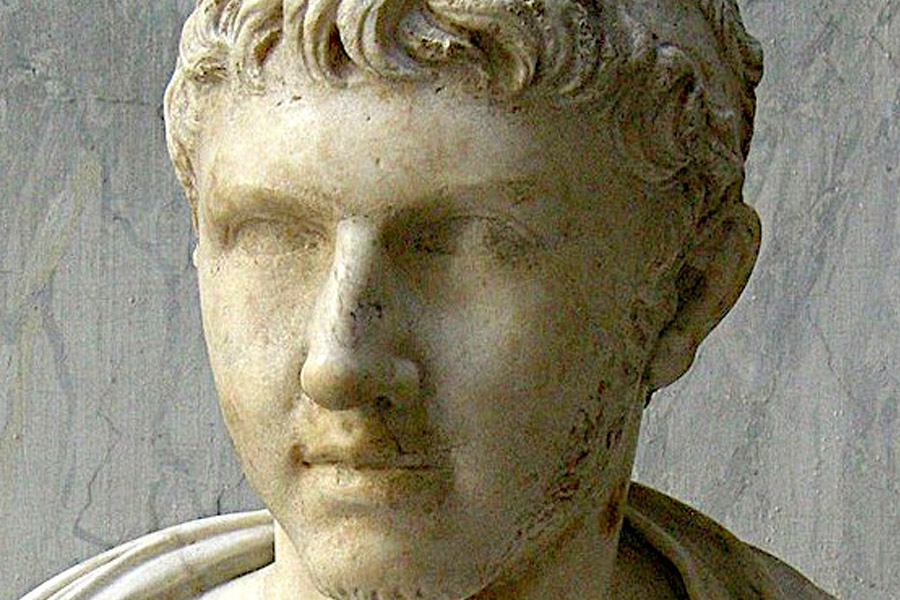
Basic Information
| Attribute | Details |
|---|---|
| Full Name | Gaius Julius Ptolemaeus (Ptolemy of Mauretania) |
| Birth | c. 13-9 BC, in Caesarea (modern Cherchell, Algeria) |
| Death | AD 40, executed in Rome by Emperor Caligula |
| Parents | Father: Juba II; Mother: Cleopatra Selene II |
| Siblings | Drusilla of Mauretania the Elder |
| Spouse | Julia Urania |
| Children | Drusilla (daughter, born c. AD 38) |
| Reign | Co-ruler from c. AD 20; Sole ruler from AD 23 to AD 40 |
| Kingdom | Mauretania, encompassing parts of modern Algeria and Morocco |
| Key Achievements | Aided Rome in suppressing the Tacfarinas revolt (AD 17-24); Patronized arts and trade |
| Notable Descendants | Grandchild: Gaius Julius Alexion; Great-grandchild: Gaius Julius Sampsigeramus |
Biography of Ptolemy
Ptolemy of Mauretania emerged as a bridge between ancient worlds, blending the sands of North African Berber heritage with the marble halls of Roman and Hellenistic grandeur. Born around 13-9 BC in the bustling capital of Caesarea, he entered a life scripted by dynastic intrigue. His early years unfolded under the scholarly shadow of his father, Juba II, a king renowned for his intellectual pursuits. Educated in the Hellenistic tradition, possibly amid the forums of Rome, Ptolemy absorbed a mosaic of cultures. By AD 5, his image graced coins, a subtle herald of his destined throne.
Ascending as co-ruler around AD 20, he navigated the turbulent currents of Roman client kingship. Three years later, in AD 23, he claimed sole authority upon Juba II’s death at age 71. His realm, Mauretania, stretched across vast territories rich in resources like Tyrian purple dye and garum sauce. Ptolemy’s rule, spanning 17 years, emphasized loyalty to Rome while fostering local prosperity. He mobilized forces against the Numidian rebel Tacfarinas from AD 17 to 24, contributing to a decisive victory that earned him senatorial honors: an ivory scepter and a triumphal robe. Statues rose in Athens, testifying to his patronage of literature and sports.
Yet, shadows loomed. In AD 40, summoned to Rome by his cousin Caligula, Ptolemy met a grim fate. Jealousy over his opulent purple cloak or the kingdom’s wealth sealed his execution, igniting revolts back home. His death at age 49 marked the end of an era, as Mauretania fragmented into Roman provinces by AD 44. Like a fading comet, Ptolemy’s life illuminated the fragility of power in the imperial orbit.
Family Tree and Relationships
Ptolemy’s lineage wove a tapestry of empires, connecting Egyptian pharaohs, Roman generals, and Berber chieftains. At its core stood his parents: Juba II, the erudite Berber king born circa 48 BC, who transformed Mauretania into a cultural hub after his Roman education, and Cleopatra Selene II, the resilient Ptolemaic princess born in 40 BC, daughter of the legendary Cleopatra VII and Mark Antony. Their union in 25 BC symbolized a fusion of East and West, birthing Ptolemy as heir to this hybrid legacy.
His only known sibling, Drusilla of Mauretania the Elder, shared this dual heritage, though her path remains veiled in history’s mist. Ptolemy’s marriage to Julia Urania, a princess from Syria’s Emesene dynasty around the 1st century AD, extended alliances eastward. Together, they produced a daughter, Drusilla, born circa AD 38, who later wed Antonius Felix, procurator of Judea, perpetuating the bloodline.
Grandparents added layers of drama. Paternally, Juba I of Numidia, king from 85 to 46 BC, fell in battle against Julius Caesar. Maternally, Mark Antony, the ambitious triumvir from 83 to 30 BC, and Cleopatra VII, Egypt’s last pharaoh from 69 to 30 BC, embodied epic romance and downfall. Great-grandparents included Ptolemy XII Auletes, the flute-playing pharaoh exiled and restored by Rome from 117 to 51 BC; Hiempsal II, Numidia’s ruler from 106 to 60 BC; and Marcus Antonius Creticus, a Roman praetor who died in 71 BC.
Descendants carried the flame forward. Ptolemy’s grandchild, Gaius Julius Alexion, and great-grandchild, Gaius Julius Sampsigeramus, integrated into Roman nobility, their lives echoing the distant thunder of ancestral glories.
| Generation | Key Figures | Notable Roles and Dates |
|---|---|---|
| Great-Grandparents | Ptolemy XII Auletes, Hiempsal II, Marcus Antonius Creticus | Ruled Egypt (117-51 BC), Numidia (106-60 BC), Roman praetor (d. 71 BC) |
| Grandparents | Juba I of Numidia, Mark Antony, Cleopatra VII | King of Numidia (85-46 BC), Roman triumvir (83-30 BC), Pharaoh of Egypt (69-30 BC) |
| Parents | Juba II, Cleopatra Selene II | King of Mauretania (48 BC-AD 23), Queen (40 BC-c. 5 BC) |
| Siblings | Drusilla of Mauretania the Elder | Shared royal upbringing |
| Spouse and Children | Julia Urania, Drusilla (daughter) | Syrian princess (1st century AD), Born c. AD 38, married Antonius Felix |
| Descendants | Gaius Julius Alexion, Gaius Julius Sampsigeramus | Grandchild and great-grandchild in Roman circles |
Career and Achievements
Ptolemy’s career developed as he balanced ambition and loyalty, much like a strategic game on a Mediterranean board. He backed Roman campaigns from the time of his co-regency in AD 20, most notably the suppression of the seven-year-long Tacfarinas uprising, which at its height involved over 50,000 insurgents. His auxiliary troops turned the tide in AD 24, securing him the title “king, ally, and friend” from the Senate.
As the only monarch, he had the luxury of minting gold coins, which increased trade in luxuries and produced enormous wealth. Urban projects flourished: roads snaked through the landscape, aqueducts quenched growing cities like Volubilis, and Caesarea’s ports hummed with commerce. Philosophy and sports were also patronized; his generosity is praised in inscriptions from Athens and Xanthos.
He woven Mauretania into the fabric of the empire by holding magistracies in Spanish Roman cities, including duovir in Gades and Carthago Nova. But there was a cost to his accomplishments. According to ancient rumors, his extravagance inspired jealousy, which ultimately led to his death in AD 40. Ptolemy’s ability to retain a kingdom spanning two million square kilometers throughout it all is evidence of his skill as a diplomat.
Extended Timeline
Ptolemy’s life traced a arc from promise to peril, marked by precise milestones.
- c. 13-9 BC: Birth in Caesarea, amid a court blending Berber and Hellenistic influences.
- Childhood to AD 11: Hellenistic education, possibly in Rome, returning home at age 21.
- c. AD 5: First coin appearances, affirming his heir status.
- AD 17: Regnal years commence; early aid in Tacfarinas conflict.
- c. AD 20: Becomes co-ruler, sharing power with Juba II.
- AD 23: Assumes full kingship after father’s death at 71.
- AD 17-24: Crucial role in defeating Tacfarinas; forces number in thousands.
- AD 24: Receives Roman honors, including symbolic regalia.
- c. AD 38: Marries Julia Urania; daughter Drusilla born.
- AD 40: Summoned to Rome; executed, sparking a four-year revolt led by his freedman Aedemon.
- AD 40-44: Kingdom annexed, divided into Mauretania Tingitana and Caesariensis.
This chronology reveals a ruler caught in history’s whirlwind, his 49 years compressing centuries of cultural shifts.
Cultural and Historical Impact
Ptolemy was a cultural alchemist who created a thriving kingdom by fusing Greco-Roman and Berber foundations. His patronage echoed his father’s scholarly bent, sponsoring works that preserved knowledge across borders. His dominion was peppered with Greek and Latin inscriptions, while everyday Berber customs persisted.
His death had a cascading effect that accelerated Roman absorption of North Africa and ended the direct sovereignty of the Ptolemaic royal family. His daughter Drusilla, whose marriage connected Mauretania to Judean politics, is one of his descendants who built a bridge to biblical stories. Today, his story resurfaces in discussions of Amazigh heritage, portraying him as the last indigenous king before colonial tides.
Archaeological echoes abound: mosaics and amphitheaters speak to blended aesthetics, while remains in Cherchell whisper of the glory of his age. This legacy was fueled by Ptolemy’s wealth, which came from trade volumes that exceeded millions in today’s equivalents. He represented the dichotomy of the client king: a flame flickering against imperial winds, both empowered and entangled.
FAQ
Who were Ptolemy of Mauretania’s parents?
Ptolemy’s father was Juba II, a scholarly Berber king who ruled Mauretania and authored numerous works. His mother, Cleopatra Selene II, was the daughter of Cleopatra VII and Mark Antony, bringing Ptolemaic Egyptian heritage to the family.
What was Ptolemy’s role in Roman conflicts?
He aided Roman forces in the Tacfarinas revolt from AD 17 to 24, providing crucial troops that led to the rebel’s defeat. This earned him honors from the Roman Senate, solidifying his status as a loyal ally.
How did Ptolemy die?
In AD 40, Emperor Caligula summoned him to Rome and executed him, reportedly due to jealousy over his wealth or attire. This act triggered revolts in Mauretania and led to the kingdom’s annexation.
Who was Ptolemy’s spouse and what was her background?
Julia Urania was a princess from the royal house of Emesa in Syria. Their marriage strengthened diplomatic ties between Mauretania and Eastern royalties.
Did Ptolemy have any children?
Yes, he had a daughter named Drusilla, born around AD 38. She later married Antonius Felix, the procurator of Judea, continuing the family’s lineage into Roman provincial circles.
What were Ptolemy’s major achievements as king?
He promoted trade in luxury goods like Tyrian purple and garum, minted gold coins, and supported urban development. Additionally, he patronized arts and sports, with statues erected in his honor in Athens.
How is Ptolemy connected to Cleopatra VII?
Ptolemy was her grandson through his mother, Cleopatra Selene II. This connection linked him to the Ptolemaic dynasty and influenced his cultural identity.
What happened to Mauretania after Ptolemy’s death?
Revolts erupted, lasting until AD 44, after which Emperor Claudius annexed and divided the kingdom into two Roman provinces. This ended independent rule in the region.