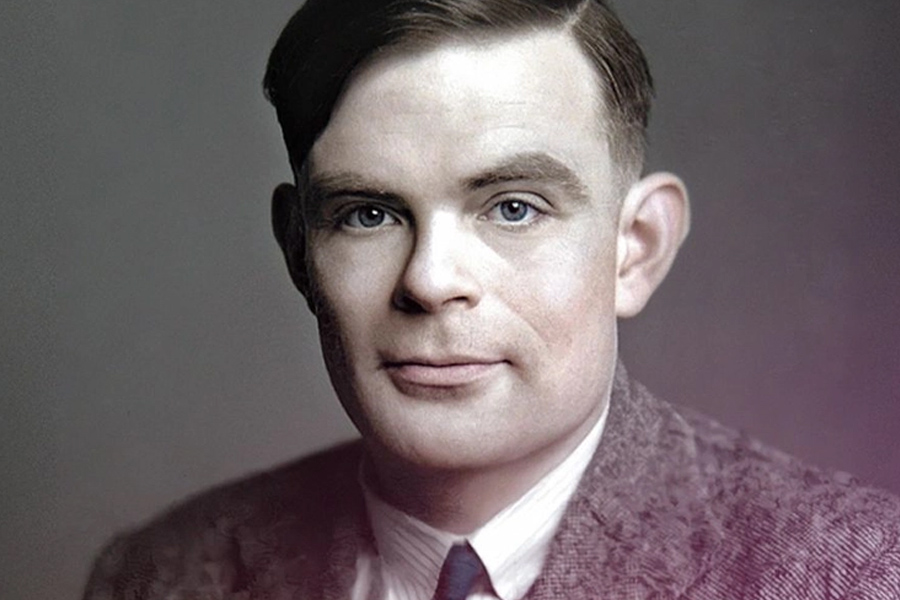
A life shaped by service, discipline, and distance
I see Julius Mathison Turing as a man who lived in the long shadow of empire, yet left behind a family line that would blaze far brighter than his own public profile. Born on 9 November 1873 in Edwinstowe, Nottinghamshire, he came from a clerical household where duty, education, and social position mattered. His father was the Reverend John Robert Turing, and his mother was Fanny Montague Boyd. That pairing gave him both inherited tradition and a strong connection to wider colonial networks, a blend that would echo through the rest of his life.
Julius was educated well and moved quickly into a serious career. He studied at Corpus Christi College, Oxford, where he earned his BA in 1894. He then entered the Indian Civil Service, which was one of the most demanding administrative paths available to a young British man of his background. In the open examination of 1895, he placed 7th out of 154 candidates, a result that says a great deal about his ability. That is not a footnote. That is a bright flare of competence. By 1896 he had passed the final examination and was posted to Madras.
The civil servant at work in India
Julius spent years in the machinery of colonial administration, and that work was more than a desk and a title. He moved through the practical pulse of district life, dealing with agriculture, sanitation, irrigation, vaccination, account auditing, and the native magistracy. He rose to Head Assistant Collector by 1906. The phrase sounds formal, but the work itself was lived in heat, dust, distance, and paperwork. It was the kind of career that can seem quiet from far away and relentless up close.
I think of Julius as a man carrying ledgers through monsoon weather, trying to keep the state legible in places where geography resisted order. His life was not built on fame. It was built on procedure, hierarchy, and endurance. Even his return to England for leave in 1907 fits that pattern. There he met Ethel Sara Stoney, daughter of an engineer tied to the railways, and they married on 1 October 1907 in Dublin. The marriage bound Julius to another family of strong institutional roots, this time in engineering rather than clerical life.
One detail stands out to me: he reportedly never paid the three guineas needed to convert his BA into an MA. That small fact feels revealing. It suggests practicality, restraint, perhaps even indifference to ornamental status. Julius seems to have preferred the plain road over the decorated one.
His marriage to Ethel Sara Stoney
Ethel Sara Stoney deserves her own place in the story. She was born in 1881 and came from an Anglo-Irish engineering family. Her father, Edward Waller Stoney, served as chief engineer of the Madras Railways, which gave the family a direct connection to the systems that stitched colonial India together. Julius and Ethel belonged to the same broad world of public service and imperial administration, but they entered it from different doors.
Their marriage also carried the burden of distance. Colonial careers often pulled families apart, and this one was no exception. The life they built was shaped by travel, duty, posting, and separation. That kind of marriage can feel like a bridge under strain, suspended over great space, yet still holding. Their household would eventually produce two sons, and those sons would take the family in dramatically different directions.
The sons who changed the family name
Alan Mathison Turing, born 23 June 1912, is the most famous family member. But Julius’s first son, John Ferrier Turing, matters too. John Ferrier, born September 1, 1908, became a London solicitor. He had two wives and children, providing Julius immediate descendants and a larger relationship.
Alan, however, was a 20th-century scientific giant. London was his birthplace when Julius served in India. Alan later became a mathematician, logician, codebreaker, and computer science pioneer. Rarely has a father and son so totally changed the family name into something worldwide, something fundamental. Julius is the root of a tree that gave rise to law and modern computation.
Julius should be more than Alan Turing’s father. That would flatten him. He was a public servant, husband, son, and father in a large family. Julius looks like the first chord of a greater tune due of Alan’s later renown.
The wider Turing family
The Turing family itself was large and layered. Julius’s father, John Robert Turing, was an Anglican clergyman, and his mother, Fanny Montague Boyd, linked the family to military and colonial networks through her father, General Mossom Boyd. Julius also had several siblings, including Fanny Jean, Charlotte Jessie, Helen Margaret, Arthur Henry, Sybil Montague, Harvey Doria, and Alexander Robert, along with siblings who died in infancy. It was a family marked by service, education, and mobility, and also by loss.
I find the sibling stories especially vivid because they show how varied one family can be. One sister became Lady Fanny Jane Trustram Eve and entered public reform life. Arthur Henry served as an army officer and died young on the North-West Frontier. Helen became a teacher. Sybil became a deaconess. Harvey became known for writing on fly-fishing and later journalism. The Turings were not a single-note family. They were an orchestra, with different instruments sounding across church, army, classroom, literature, law, and science.
Family members at a glance
| Person | Relationship to Julius | Notable detail |
|---|---|---|
| John Robert Turing | Father | Anglican clergyman |
| Fanny Montague Boyd | Mother | Born in India, daughter of General Mossom Boyd |
| Ethel Sara Stoney | Wife | Daughter of Edward Waller Stoney |
| John Ferrier Turing | Son | Solicitor, father of later descendants |
| Alan Mathison Turing | Son | Mathematician and codebreaker |
| Fanny Jean Turing | Sister | Later Lady Fanny Jane Trustram Eve |
| Arthur Henry Turing | Brother | Army officer |
| Sybil Montague Turing | Sister | Deaconess |
| Harvey Doria Turing | Brother | Writer and journalist |
| Charlotte Jessie Turing | Sister | Lived to adulthood |
| Helen Margaret Turing | Sister | Teacher |
Later life, retirement, and death
Julius left the Indian Civil Service in 1926. He retired after a long career in a system that relied on guys like him to administer districts. He was buried in Woking after dying in Guildford, Surrey, on 3 August 1947. World had changed beyond recognition by then. Falling empire. Turing was already changing science. Julius entered memory from administration.
His life is so often lost in history. They support the beams, yet others remember the building. Julius operated inside institutions, not above them. It doesn’t make him little. He is foundational.
The grandchildren and the next generation
Julius’s grandchildren came through John Ferrier Turing. Among them were Brian John Turing, Inagh Jean Turing, Shuna Turing, Janet Ferrier Turing, and John Dermot Turing. This next generation kept the family line visible in different ways. Some became part of family history records, while John Dermot Turing became especially well known in later life. The family continued to spread, like ripples from a stone dropped into still water.
What interests me most is how the family identity evolved. Julius belonged to a world of clerics, colonial administrators, engineers, and reformers. His son Alan would step into mathematics and codebreaking. The family line moved from colonial governance to the machinery of modern thought. That is a remarkable shift across only a few generations.
FAQ
Who was Julius Mathison Turing?
Julius Mathison Turing was a British civil servant born in 1873. He studied at Oxford, entered the Indian Civil Service, and served in Madras. He is also known as the father of Alan Turing.
Who were Julius Mathison Turing’s parents?
His father was Reverend John Robert Turing, and his mother was Fanny Montague Boyd. His family background combined clerical, military, and colonial connections.
Who was Julius Mathison Turing’s wife?
He married Ethel Sara Stoney on 1 October 1907 in Dublin. She came from a family tied to engineering and the Madras railways.
Who were Julius Mathison Turing’s children?
He had two sons: John Ferrier Turing and Alan Mathison Turing. John Ferrier became a solicitor, and Alan became a world-famous mathematician and codebreaker.
What did Julius Mathison Turing do for work?
He served in the Indian Civil Service. His work involved district administration, including agriculture, sanitation, irrigation, vaccination, and official reporting. He rose to Head Assistant Collector by 1906.
When did Julius Mathison Turing die?
He died on 3 August 1947 in Guildford, Surrey.
Why is Julius Mathison Turing important?
He matters as a historical figure in his own right because of his civil service career and family background. He also stands at the center of the family that produced Alan Turing, one of the most influential thinkers of the modern age.