A name that carries weight
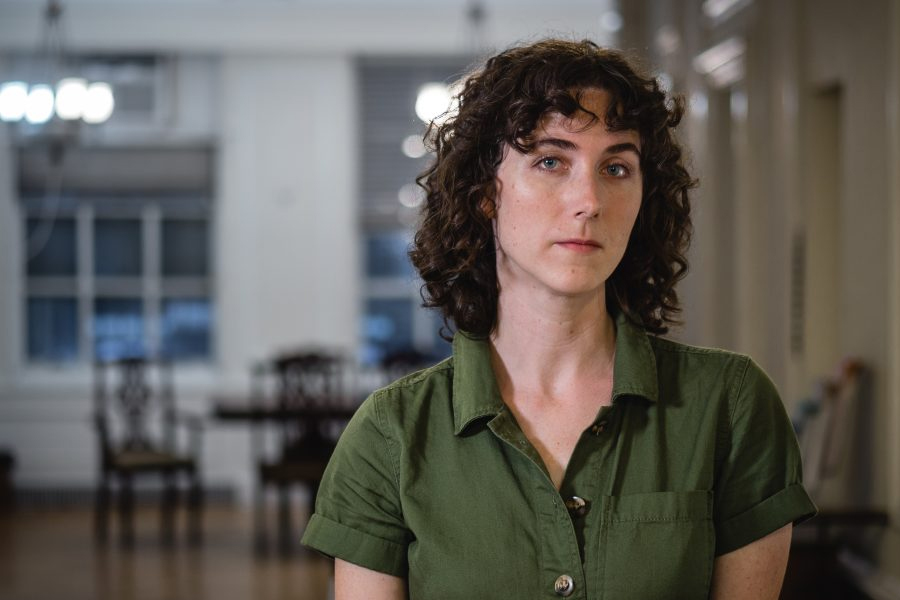
When I look at Maud Streep, I see a person standing at the edge of two worlds. One world is private, literary, and carefully kept. The other is public, bright, and crowded with names people already know. She belongs to both, yet seems to move through them with the softness of someone who prefers the page to the spotlight.
Maud Streep is best understood as a writer first. Her public profile points toward fiction, short stories, and a life shaped by workshops, fellowships, and literary communities rather than celebrity noise. She is connected to New York and Brooklyn, and her education includes an MFA from the University of Montana. That detail matters to me because it suggests craft, discipline, and the long apprenticeship of writing. No fireworks, just steady heat.
Her work has passed through respected literary spaces, and that gives her profile a particular texture. It is not the story of a loud ascent. It is the story of a writer building a body of work the way a mason builds a wall, one careful piece at a time.
Early life and background
Maud Streep is widely placed in a family that has roots in both art and intellectual life. She was born into a household shaped by performance, writing, and public recognition, but her own public path has stayed more understated. In the material I have, she is described as being from Nyack and later living in Brooklyn. That geography feels fitting. Nyack gives river air and distance. Brooklyn gives density, motion, and a thousand possible versions of self.
Her birth year is often given as 1984, which places her among writers who came of age in a world already shifting fast, where print culture and digital culture began to overlap like two weather systems. By 2014, she was already earning recognition in literary circles. By 2017 and 2018, her name had begun appearing in award lists and anthology pages. The timeline is not flashy, but it is real, and I trust that kind of progression.
The family tree around Maud Streep
The family connection around Maud Streep is fascinating. Her parents are Harry Streep III and Maeve Kinkead. Abraham Streep is her brother. Her personal life revolves around her household.
From there, branches extend wide.
Maud is Streep on her father’s side. Since Harry Streep III is Meryl’s brother, she’s her aunt. Maud is Meryl’s cousin; Henry Wolfe, Mamie, Grace, and Louisa Jacobson are her children. Family names can feel like pearls on a thread, but these are part of an artistic legacy.
Harry William Jr. and Mary Wilkinson Streep are her paternal grandparents. That side of the family has an old-world depth that seems to have developed over time.
Kinkeads provide another layer on her mother’s side. Maeve Kinkead is the daughter of Eugene and Katharine. Katharine T. Kinkead was a writer and journalist like her father Eugene. Her maternal line isn’t just famous. Literary. It smells like ink, archives, and deadlines.
The family tree feels more like a floor-to-ceiling library than a trophy case. Performers and actors are present. Other brings writing and reporting. Maud is surrounded by architecture.
What I know about her career
Maud Streep’s career is literary, and that is where the clearest story lives. She has been associated with fiction, and one of her most visible works is the story “The Crazies.” That story was her first published piece in one notable venue, and it later appeared in an anthology of debut short stories. That tells me something important: she did not begin with volume. She began with precision.
She also wrote “Discriminating People,” which adds to the picture of a writer interested in human complexity, social friction, and subtle emotional pressure. I imagine her fiction as a lens held close to the surface of everyday life, catching the light where others pass too quickly to notice it.
Her literary path includes fellowships and support from institutions such as Bread Loaf, the Center for Fiction, and other writers’ programs. She was named a fellow in 2017, and that kind of recognition usually means a writer has already shown something durable. Not just promise, but voice.
She also received the Nettie Weber Award while connected to the University of Montana, which adds another marker to the timeline. Awards like that do more than decorate a résumé. They say someone in the room noticed the work and believed it mattered.
Work achievements and public recognition
I would describe Maud Streep’s achievements as concentrated rather than sprawling. She has not built her reputation through quantity. She has done it through selected, visible milestones.
The publication of “The Crazies” mattered. The inclusion of that story in a debut anthology mattered. The fellowship recognition mattered. The editorial and workshop connections mattered too. They show a writer moving through the literary ecosystem with purpose, like someone walking a narrow bridge but keeping balance.
There is also an interesting tension in the available details. On one side, she is connected to film and to broader creative fields. On the other, her most public credit is fiction. That contrast gives her profile a certain elegance. She is not trying to be everything at once. She seems to have chosen a lane and traveled it with care.
Finance and personal profile
There is little public information on Maud Streep’s finances, which is significant. It portrays a life not for sale. My material lacks verifiable wealth, income, and asset numbers. A literary career normally involves grants, fellowships, teaching, editing, and writing, not spectacle.
This is enough for me to sketch the outline. Celebrity entrepreneur is not her portrayal. She is presented as a writer with institutional and family support, which are different.
Recent mentions and public visibility
Recent mentions of Maud Streep are sparse, which fits the overall pattern. She seems to appear mostly in literary contexts rather than in mainstream entertainment coverage. That scarcity gives her profile a kind of shadowed glow. The name is known, but only in certain rooms.
When she does appear, it is usually through writing communities, alumni notes, awards, or anthology references. That makes her public presence feel selective, almost like a house with only a few lit windows at night. You know someone is inside. You just do not need to see every room.
The shape of her timeline
If I line up the dates, a coherent portrait forms.
1984 places her birth in the mid 1980s.
1993 and 1994 anchor her childhood in a family already known to the public.
2014 shows early literary recognition through the University of Montana.
2017 marks fellowship acknowledgment.
2017 and 2018 bring published fiction and prize recognition.
2019 adds another story publication.
2025 shows her still moving through literary circles and remaining active enough to be mentioned in contemporary writing news.
That is not a dramatic arc, and I do not think it needs to be. It is more like a river widening slowly as it goes. The current is steady. The path is clear.
FAQ
Who is Maud Streep?
Maud Streep is a fiction writer with ties to New York and Brooklyn, known for literary work rather than celebrity performance. She has published fiction and received recognition in writing circles.
Who are Maud Streep’s parents?
Her parents are Harry Streep III and Maeve Kinkead.
Does Maud Streep have siblings?
Yes. She has a brother named Abraham Streep.
How is Maud Streep related to Meryl Streep?
Meryl Streep is Maud Streep’s aunt.
Who are Maud Streep’s cousins?
Her publicly identified cousins include Henry Wolfe Gummer, Mamie Gummer, Grace Gummer, and Louisa Jacobson.
What kind of work is Maud Streep known for?
She is known for fiction writing, especially short stories, including “The Crazies” and “Discriminating People.”
Has Maud Streep received recognition for her writing?
Yes. She has been connected with fellowships, awards, and anthology publication, including recognition for debut short fiction.