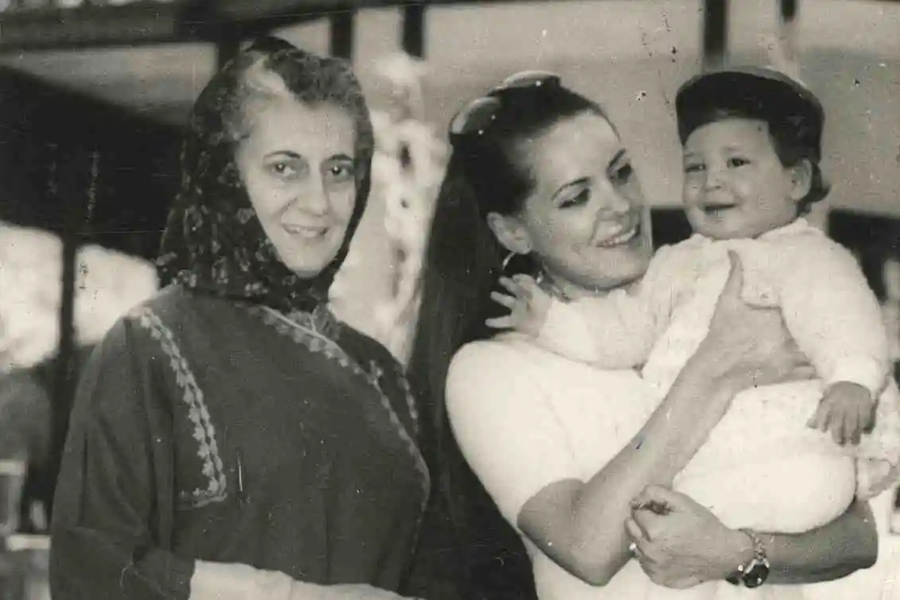
A name that opens a larger family story
When I look at the name Ratimai Commissariat, I do not see a public celebrity, a politician, or a headline-maker. I see the faint but firm outline of a family matriarch whose life is mostly traced through the people around her. She stands like the root of an old tree, partly hidden underground, yet holding up a line of branches that later spread across Indian history.
Ratimai Commissariat is best understood as the mother of Feroze Jehangir Ghandy, later known as Feroze Gandhi. Through him, her family became linked to some of the most recognizable names in modern India, including Indira Gandhi, Rajiv Gandhi, and Sanjay Gandhi. Her story is not loud. It is a story of inheritance, migration, family duty, and the long shadow of private life cast into public history.
Family background and household life
The record lists Ratimai as a Bombay Family Parsi woman. She married marine engineer Jehangir Faredoon Ghandy. Professional career, community identification, and family reputation were important in their urban, educated Bombay household in the early 20th century. The environment gives her life a richness that is hard to notice. It implies a home where discipline, custom, and social status coexisted.
They also had roots in Bharuch, Gujarat, and eventually moved to Bombay and Allahabad. These places represent her life’s geography. She was not confined to one room. Like a little boat pushed by greater currents, her family sailed between ports, cities, and changing social environments.
Ratimai and her son Feroze moved in with her sister Shirin Commissariat in Allahabad after her husband’s death. Shirin was a Lady Dufferin surgeon. The arrangement reveals something essential. No one isolated Ratimai. When circumstances changed, she and other women and relatives helped each other. Her household was not loss-driven. Kinship held it together.
Her children and the family line
The clearest and most important family member connected to Ratimai Commissariat is her son Feroze Jehangir Ghandy. He was born on 12 September 1912 in Bombay. His later public life would become deeply entwined with the nationalist movement and with the Nehru family. He studied, joined politics, became a parliamentarian, and built a public identity that was often discussed in relation to his wife and in-laws. Yet before all that, he was Ratimai’s son.
The family was also large. Feroze is described as one of five children, with siblings named Dorab, Faridun Jehangir, Tehmina Kershashp, and Aloo Dastur. This matters because it places Ratimai not merely as the mother of one famous son, but as the center of a broader household. A family with five children is never a still image. It is a room full of competing voices, routines, and expectations.
Later, Feroze married Indira Nehru, and that marriage connected Ratimai’s lineage to the Nehru family. From that union came Rajiv Gandhi and Sanjay Gandhi, Ratimai’s grandchildren. Through them, her family line entered a new historical scale. Their names became known across the country, and the original family branch from Ratimai and Jehangir grew into one of the most watched political dynasties in India.
Beyond Rajiv and Sanjay, the line continued through the next generation, including Rahul Gandhi, Priyanka Gandhi, and Varun Gandhi. I mention them not as a detour, but because a family story can act like a river. Once it starts moving, it keeps carrying names downstream.
The private woman behind the public chain
What strikes me most about Ratimai Commissariat is how little of her life appears as a separate public biography. She was not recorded as a speaker, officeholder, writer, or activist. Her public identity survives mostly through family connections. That can make a person seem smaller than they were. I do not think that is fair.
Sometimes history remembers the trumpet and forgets the drum that kept the rhythm. Ratimai likely lived a life shaped by care, domestic responsibility, religious and cultural practice, and the pressures of raising a family during a period of social change. In one family account, she is shown reminding Feroze to wear his kusti under his wedding sherwani, a small gesture that reveals both affection and cultural continuity. Tiny acts like that often preserve identity better than speeches.
There is also the matter of her role after widowhood. Moving to Allahabad with Feroze and living near Shirin Commissariat suggests resilience. It suggests a woman who did not vanish into grief, but adjusted her life around the needs of family. That kind of survival is not dramatic in the usual historical sense, but it is strong. It bends without breaking, like a reed in monsoon wind.
Ratimai Commissariat in the larger Gandhi family network
I must position Ratimai in the family web of Jehangir Faredoon Ghandy, Feroze Gandhi, and Indira Gandhi to understand her. Her husband is the family’s Parsi professional elder. Her son is the nationalist bridge. Her descendants reflect national leadership and public scrutiny.
Ratimai is like the structure’s silent hinge. A hinge is unsung but determines what opens and closes. No Feroze without her. Without Feroze, Rajiv and Sanjay are gone. The family’s public image changes without that line.
Her Parsi surname, Commissariat, is rare on the internet and valuable to me. The name is sharp because of its scarcity. Unlike other labels, it stands out. The lineage is marked.
Extended family snapshot
Here is the family circle as I understand it:
| Person | Relationship to Ratimai Commissariat | Notes |
|---|---|---|
| Jehangir Faredoon Ghandy | Husband | Marine engineer |
| Feroze Jehangir Ghandy, later Feroze Gandhi | Son | Public figure, parliamentarian |
| Dorab | Child | One of five children |
| Faridun Jehangir | Child | One of five children |
| Tehmina Kershashp | Child | One of five children |
| Aloo Dastur | Child | One of five children |
| Shirin Commissariat | Sister | Surgeon, cared for Ratimai and Feroze after Jehangir’s death |
| Indira Nehru Gandhi | Daughter in law | Feroze’s wife |
| Rajiv Gandhi | Grandchild | Son of Feroze and Indira |
| Sanjay Gandhi | Grandchild | Son of Feroze and Indira |
| Rahul Gandhi | Great grandchild | Later generation |
| Priyanka Gandhi | Great grandchild | Later generation |
| Varun Gandhi | Great grandchild | Later generation |
FAQ
Who was Ratimai Commissariat?
Ratimai Commissariat was the mother of Feroze Gandhi and the wife of Jehangir Faredoon Ghandy. I see her as the family matriarch at the start of a line that later became central to Indian political history.
Why is Ratimai Commissariat important?
She is important because she is the link between an older Parsi family background and the later Gandhi family line. Through her son Feroze, she became part of a family chain that includes Rajiv Gandhi and Sanjay Gandhi.
What do we know about her personal life?
The public record is limited, but I can say she was part of a Parsi household, married to a marine engineer, and later lived with her son and sister after her husband’s death. Her life appears to have centered on family, religion, and adjustment through change.
Did Ratimai Commissariat have a career?
I found no evidence of a separate public career for her. Her historical presence is mostly tied to family life rather than formal public work.
How many children did she have?
She is associated with five children, including Feroze Jehangir Ghandy, Dorab, Faridun Jehangir, Tehmina Kershashp, and Aloo Dastur.
Who are her most famous descendants?
Her most famous descendants are Rajiv Gandhi and Sanjay Gandhi, her grandchildren through Feroze Gandhi and Indira Gandhi. Later generations include Rahul Gandhi, Priyanka Gandhi, and Varun Gandhi.
Where does Ratimai Commissariat fit in the Gandhi family tree?
She sits at an important starting point in the family tree. I think of her as the hidden root beneath a very visible canopy, connecting the Parsi Ghandy family to the later Gandhi political lineage.